by Berend Booms, Associate Editor, Future of Assets
My career didn’t begin in asset management. It began in consultancy and change management at Cisco. I worked on a number of teams and large projects, all aimed at guiding change. Change in technology, change in rules and regulations, and most importantly, change in the way of working. On paper, all of these initiatives were framed around tools, systems, and processes. In practice, I found they were mostly about people, and their skepticism, enthusiasm, fear, pride, and deeply ingrained habits. At its core, I learned how people tend to respond when asked to do their work differently tomorrow than they did yesterday. This formative experience early on really shaped how I approach change at scale.
When I did eventually move into the asset management space, I saw these familiar patterns come to life in a new light. Whether it’s implementing an EAM system, designing a maintenance strategy, introducing data-driven decision-making, or doubling down on reliability initiatives: the biggest challenge most projects face is our human nature. Software can be configured, dashboards can be built, processes can be mapped – but unless the people responsible for using them understand the “why,” feel heard in the “how,” and can find themselves in the “what,” the initiative will struggle to find success.
In my experience, change management is often treated as a supporting activity, as something that’s done alongside the “real” work of implementation. I’ve always considered this to be a fundamental misunderstanding; change management IS the work. It is the connective tissue between strategy and execution, and it determines whether a project finds its place in the day-to-day business-as-usual, or remains an obsolete attempt that never quite took hold.
The Human Side of Business Transformation
Asset-intensive industries come with some highly complex environments. These are often shaped by years of operational history, informal norms, deeply ingrained routines, and a justifiable focus on safety and reliability. In these contexts, change cannot be imposed; it must be guided in order to succeed.
At Cisco, I learned that effective change starts with listening. In my case, this was often a genuine curiosity about how work is actually done. I found that most people aren’t opposed to improvement; they are resistant to disruption without clarity. Taking the time to understand their reality, involving them early, and communicating transparently helps channel feelings of resistance into a sense of ownership.
In asset management, this is especially important. Maintenance technicians, planners, reliability engineers, and operators hold an immense amount of tacit knowledge. If change initiatives ignore that knowledge, they erode trust. Initiatives that incorporate it, rather, unlock momentum.
For me, change management done well is the difference between compliance and commitment. You can instruct someone to enter data into a system, but you cannot force them to believe that doing so will improve their work. That belief is built through consistency, clarity, and transparency. When those elements are present, trust starts to build, and change starts to accelerate. Without a foundation of trust, even the best-designed initiatives will falter.
In Change Management (and in Cooking), Mentors Make a Massive Difference
Like change management, cooking is a skill I’m glad to have picked up early. When I first started cooking for myself, the learning curve felt steep. I was cooking by taste and by the book, and neither approach was working particularly well. In many ways, my first strides in the kitchen were similar to my first days at Cisco. There was a lot to absorb, I made a lot of mistakes, and I was constantly aware that others seemed better at what I was doing than I was. In both cases, mentors were what made the difference for me.
I had some amazing people working alongside me at Cisco, all of whom had navigated transformation before me, and inspired me to follow in their footsteps. They taught me that confidence in change management does not come from rigid control, but from preparation and adaptability. In the kitchen, my greatest inspiration was my grandmother, Antonia ‘Toos’ van de Water. In my eyes, she was the perfect cook: her dishes were simple, yet refined; there were no unnecessary ingredients, just her deep understanding of flavor and balance. In their simplicity, my grandmother’s meals contained a world of nuance – and this is a lesson that has stayed with me.
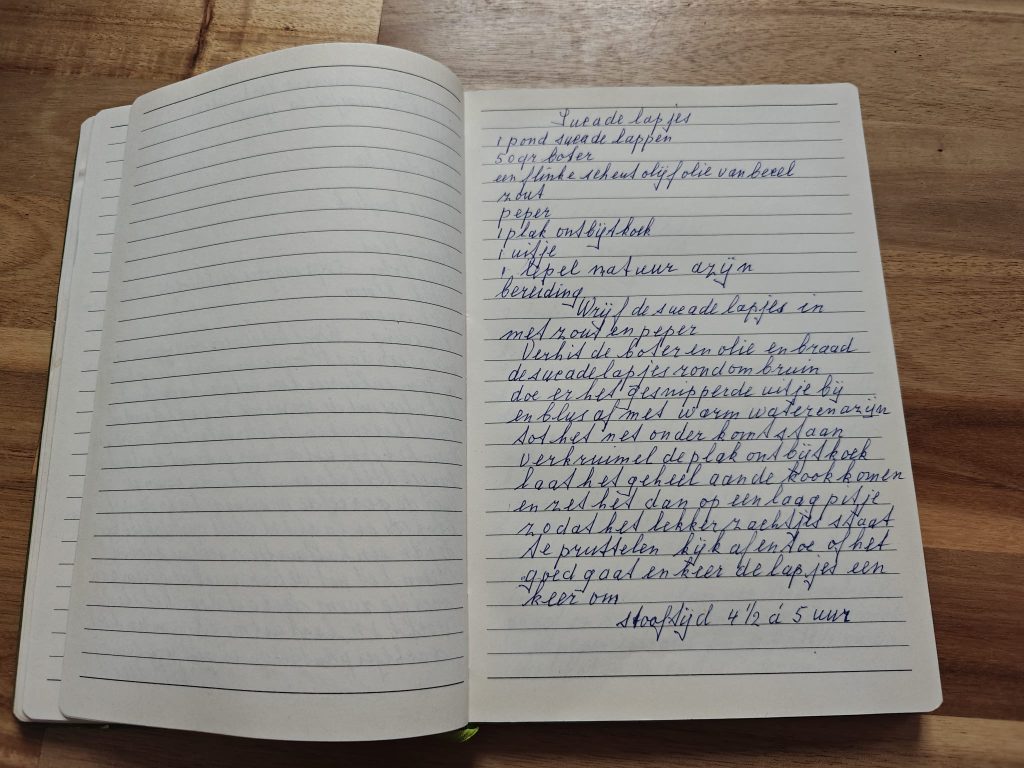
Good change management is rarely ever flashy; it doesn’t need grand gestures or overcomplicated frameworks. What works is an approach that is thoughtful, deliberate, and grounded in some of the fundamentals I swear by: clear communication, strong stakeholder engagement, visible leadership, and patience. Like my grandmother’s dishes, it may appear effortless when done right, but it’s a result of ample preparation, care, and attention to detail.
I also believe that you cannot rush a good meal without compromising quality; ingredients need time, flavors need to develop, and the cooking process should be respected. Similarly, sustainable change in asset management requires time to settle. Behavior does not shift overnight, trust is built gradually, and new routines become habits only through repetition and reinforcement.
In both cooking and change management, shortcuts are tempting. When I’m running late on preparing dinner, I often think about just cranking the heat up. And when I’m nearing a deadline on a project, I might be tempted to skip a workshop to stay on schedule. But the result is often the same: something that doesn’t look good on the outside, and isn’t quite ready on the inside.
Investing in change management may not always be appetizing, for it often doesn’t show immediate, measurable returns. While not flashy, it is the make-or-break factor for asset initiatives. I have seen seemingly flawless implementations fail because the human dimension was treated as an afterthought. Organizations that treat change management as a strategic capability consistently outperform those that see it as optional overhead. They embed new systems and strategies more deeply, realize value more quickly, and build cultures that are resilient to future change.
How Both Change Management and Cooking Express Another C: Care
I cook dinner for our family almost every day. It’s more than a practical necessity; it’s a part of my routine I genuinely look forward to. In the kitchen, I’ve found a very direct way to express care while also making sure my kids eat a healthy, balanced meal. It’s also a moment of reflection, some time that I get to myself each day to do something I really enjoy. The more I cook, the more I’ve come to realize that mastery is not about complexity, but about consistency. I need to think about what I’m making for dinner every day. That also means I need to plan ahead, and adjust when something does not go as planned. Change management is no different in this regard.
Most of us are constantly shaping the future of our organizations: by adopting new systems, by implementing new processes, and by setting new expectations. Whether these changes nourish the organization or leave it unsettled depends largely on how thoughtfully we guide them. Like cooking, change management is an investment in something bigger than all of the ingredients combined. It is the care behind the process that determines the quality of the outcome.