By Kevin Price | Global Head Enterprise Asset Management at IFS
A Strategic Imperative for Asset-Intensive and Risk-Critical Industries
In asset-intensive and risk-critical industries—such as utilities, energy, transportation, mining, and aerospace & defense—Asset Investment Planning (AIP) has emerged as a cornerstone of sustainable performance, resilience, and regulatory compliance. As capital intensity rises and risk exposure increases, organizations must make smarter, data-driven decisions about where, when, and how to invest in their asset base. What we typically fail to notice is that the AIP need is critical in every industry and every process.
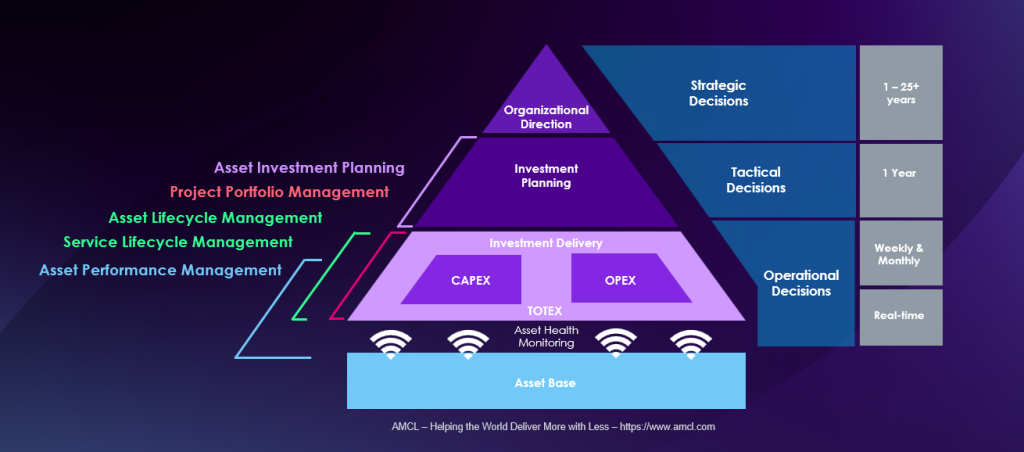
As organizational leaders, you want to make sure that the strategic decisions you make at the highest levels (which typically have targeted impacts from 1-25+ years) are understood through every level and are taken into consideration in every natural motion of the business. These include actions like sustainability / ESG goals, employee safety, market expansions, merger and acquisitions activity, additions and renovations to large capital projects and more.
Subsequently, there must be planning on how to accommodate the larger strategic goals into tactical actions (or “Tactical decisions”). These are the more tangible plans, which require a tremendous amount of “What-if” scenario planning. “What if we were able to grow into the northwestern region of a struggling geography, what would that investment look like over the course of a year?” or “What if we were to take a serious look at how we execute our plans to reduce our carbon footprint in our work fleet?”
Even further into the organization will be how those decisions are routed out into the daily operations with follow up questions like “which vehicles in my fleet could I target for replacement of an equivalent vehicle to support the business at a more optimized level of operation and/or emission?” or “what qualifications do my work crew have now and what will I need them to have with the coming regulation changes and expansions that we wish to take into the northwestern region?”
As you can imagine, there are many points of consideration in making decisions like these and why do it with systems that are not connected and/or are not built for your industry?
Or finally, as the bottom layer of this figure illustrates, are not connected to communicate asset health, condition, location, and more? When all of these layers are connected within a complete Asset Lifecycle Management framework, strategic decisions made in the board room can filter with transparency and action through every level of the organization.
Within this context, a well-implemented Asset Lifecycle Management (ALM) framework provides a uniquely integrated and closed-loop approach to AIP—linking strategy, execution, and continuous optimization across the full asset lifecycle.
Why Asset Investment Planning Matters More Than Ever
Several structural pressures are reshaping investment strategies:
- Aging infrastructure and deferred maintenance backlogs
- Regulatory scrutiny around safety, reliability, and ESG outcomes
- Capital constraints requiring prioritization of high-impact investments
- Operational risk exposure, especially in safety-critical environments
- Decarbonization and energy transition mandates
Traditional capital planning approaches—often siloed, spreadsheet-driven, and disconnected from operational reality—are no longer sufficient.
True Asset Investment Planning (AIP) transforms traditional investment planning from periodic budgeting into a dynamic, risk-informed, and value-driven discipline.
Asset Lifecycle Management (ALM) as the Core Foundation for the Full Industry Need
The most effective approach to AIP positions it not as a standalone process, but as an embedded capability within Asset Lifecycle Management—spanning:
- Plan – Long-term investment strategy, risk modeling, and capital allocation
- Build & Acquire – Capex project execution and asset commissioning
- Operate & Maintain – EAM-driven maintenance, performance, and reliability
- Optimize & Renew – Continuous improvement, replacement planning, and reinvestment
This closed-loop model ensures that investment decisions are grounded in real operational data and outcomes, not static assumptions.
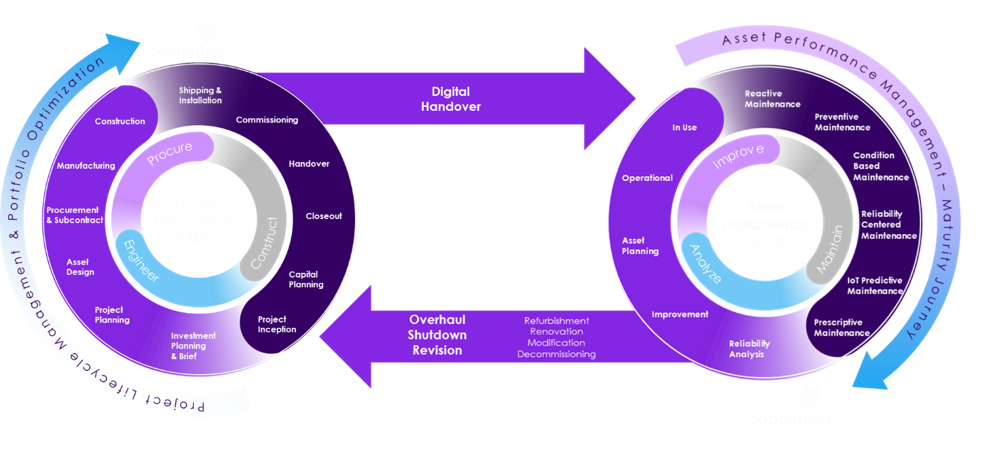
The shared reality, in any business, is that organizations invest in assets to achieve performance, resilience, capacity, and to reduce operational and financial risk.
To deliver those outcomes, Asset Investment Planning (AIP) must remain tightly connected to both CAPEX project delivery and OPEX operational processes.
When these areas drift apart, lifecycle costs increase and long‑term asset performance declines. On the CAPEX side, the focus is on structured project management: planning, estimating, contracting, procurement, and financial control.
As construction, installation, testing, and commissioning progress, large volumes of asset data are created—technical specifications, configuration details, performance expectations, warranties, and compliance documents.
A well-integrated ALM platform also enables organizations to standardize maintenance strategies, spare parts requirements, and standardized work packages during the CAPEX phase so operations can start with a complete, ready‑to‑execute maintenance model and then ensures this information is transferred seamlessly at handover, forming a complete and accurate asset record for OPEX.
During OPEX, the priority is maintaining performance and managing lifecycle cost.
A robust ALM framework supports maintenance strategy execution and provides the foundation for moving toward more predictive maintenance. By integrating real‑world operational data—sensor readings, IoT signals, anomaly detection, and time‑series forecasting—organizations can detect deviations early, adjust maintenance plans dynamically, and align actions with asset criticality and risk.
This enables a shift from time‑based or reactive approaches to data‑driven, predictive maintenance. Operational insights then feed directly back into investment planning. Assets that degrade faster, pose higher risk, or show rising costs trigger data‑backed reinvestment or refurbishment decisions. Assets performing better than expected can have their life extended.
The result is a closed loop where CAPEX projects deliver the data and structure required for efficient operations, and OPEX performance informs smarter, more accurate future investments. This improves reliability, optimizes lifecycle cost, and ensures capital is allocated where it delivers the greatest impact – a Complete Solution from before-start to after-finish.
Because Asset Investment Planning (AIP) is critical in so many ways, let’s explore a few key areas of opportunity! Do remember, however, that when AIP is embedded into the very fabric of your Asset Lifecycle journey, there will be many, many more areas of opportunity to consider!