by Berend Booms, Associate Editor, Future of Assets
My six-year-old son loves Pokémon. He has followed Ash across Kanto, Johto, and far beyond, absorbing the logic of that world long before he could articulate it. He knows many Pokémon by name, and understands that each of them has a type. Impressively, he has a very good understanding of the type matchups. He will tell you why Electric beats Water, why Grass struggles against Fire, and why in general, some Pokémon are simply better suited to certain battles than others. Yet for all that knowledge, there is one defining experience he has never had: choosing his starter.
If, like me, you’ve played any of the original Pokémon games, there is a good chance this moment is etched into memory: you arrive in Pallet Town, eager to explore the world of Pokémon, only to be stopped at the edge of a patch of tall grass by Professor Oak. He warns you that it is unsafe to go alone, and escorts you back to his laboratory. Here, three Poké balls sit on the table, and you get to pick your companion. Do you go for Bulbasaur, the Grass starter; Charmander, the Fire starter; or Squirtle, the Water starter?
It appears to be a simple choice, but looks can be deceiving. As a kid, I remember taking much longer than required to make up my mind, instinctively aware that this decision mattered. At the time, I had no idea of type matchups or long-term power balance in the game, but I knew that I was committing to more than just a companion: I was choosing how I would experience the game.
The reason this moment is so powerful is not nostalgia alone; it is deliberate design. Pokémon teaches us that early choices shape trajectories, but not outcomes. You can complete the game with any starter, but you will not experience the game in the same way.
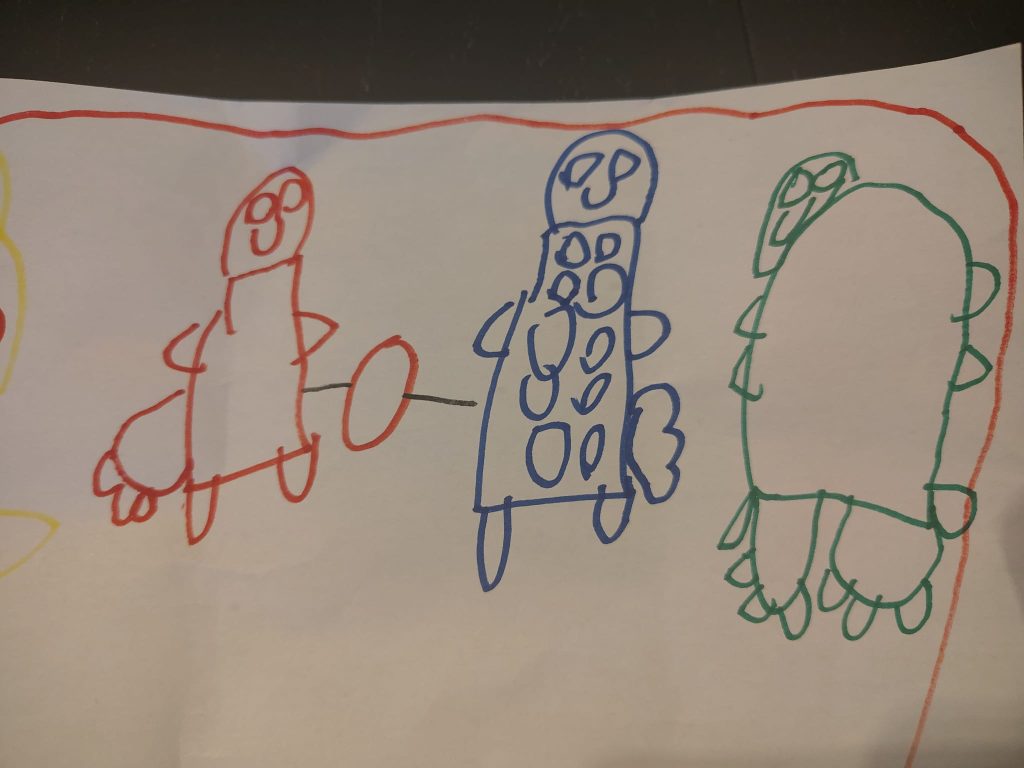
Early Choices Shape Your Experience
From the moment you set foot outside of Pallet Town, the consequences of your decision in Professor Oak’s lab start to take shape. As you make your way through Viridian City and into Viridian Forest, the road is riddled with Bug- and Grass-type Pokémon. If you went with Charmander for your starter, this is a comfortable journey: Fire-type attacks cut through the forest like a knife through butter. Had you chosen Squirtle as your starter instead, you are bound to experience much more friction, as you battle your way through the swarms of insects and plants all determined to show you how eager they are at to dispose of any Water-type Pokémon coming their way.
Then, the game pivots. Clearing Viridian Forest and reaching Pewter City means you get to take on the Pewter City gym. The first gym leader, Brock, specializes in rock-type Pokémon. This is where Squirtle comes into its own, because its Water-type attacks are devastatingly effective against Brock’s team. You will no longer be second-guessing your starter selection, as you’ll have earned your first gym badge in no time. Charmander on the contrary starts to stagnate. That familiar feeling of squashing everything in sight soon gives way to the realization that you will need to adapt: either you grind it out with Charmander to overpower Brock with pure strength, or you invest in catching and training one of the Grass Pokémon to diversify your team. The Grass starter Bulbasaur offers an interesting middle ground: it is less dominant in the early game, but well-positioned for what comes next.
This pattern of constantly weighing your options repeats itself throughout the game. Amid this continuous battle of rock-paper-scissors, the game is not built around which starter is best. It is built around understanding the implications of your choice, and whether you are willing to adapt your experience to it. As you progress through the game, the absolute importance of your starter diminishes. Traversing through Kanto, you can capture stronger Pokémon to bolster your team. In doing so, you diversify the movesets and type coverage that will help you emerge from battle victoriously. By the time you reach the game’s final challenge, the Elite Four, your adventure is no longer structured around accommodating your starter; it expects you to have learned to adapt, specialize, and prepare. For me, this is where the starter comparison becomes most revealing.
Outgrowing Your Starter: When Sentimentality Gives Way to Pragmatism
In the first generation of Pokémon, none of the starters is clearly the strongest Pokémon in the game. Bulbasaur’s final evolution Venusaur offers excellent status moves and has a decent amount of favorable matchups, but rarely is it dominant on raw stats alone. Charizard, the final form of Fire starter Charmander, has very strong offensive potential, but its typing introduces vulnerabilities that require careful management. Water starter Squirtle’s final form, Blastoise, is reliable and well-rounded, but often outclassed by other Water-type Pokémon in both speed and special attack.
From a utility perspective, Blastoise stands out to me as being the most useful. Its ability to learn valuable HMs (special moves that are required to progress through the game) like Surf make it consistently useful throughout your adventure. By comparison, Charizard’s raw offensive potential is constrained by a comparatively narrow moveset, so you will always need to dedicate a slot on your team of six to another Pokémon to travel across bodies of water using Surf. Venusaur’s utility is of a different nature: it is less useful for traversal, but offers much more in terms of control over the game through status altering moves and strong overall type coverage.
When it comes to beating the Elite Four and finishing the game, sentimentality gives way to pragmatism. While for many players their starter remains familiar and trusted, it is not always the optimal choice. Starmie outperforms Blastoise on speed, special attack, and moveset coverage; Arcanine’s extremely strong physical damage output rivals Charizard; and Exeggutor often exceeds Venusaur in power level, trading endurance for a far higher offensive ceiling. This is not a flaw in the game; it is the point of the game.
While your starter is rarely the best or strongest Pokémon on your team, it is the Pokémon that teaches you how to play. It helps shape your habits, your expectations, and your tolerance for friction. It determines whether you learn to adapt early on or later in the game, whether you rely on brute force and power or tactics, and whether you experience momentum up front or earn it over time. As a long-time enjoyer of the franchise, I feel that your starter choice alone does not decide success; what it does instead is define your learning curve. This mirrors how asset management is often framed inside organizations today.
CMMS, EAM or ERP: Choosing How You Play the Asset Management Game
When organizations set out to formalize how they manage and maintain their assets, they face a similarly formative decision early on. The decision is not whether to manage your assets, but how: what kind of system you choose to support your decision-making, operational behavior, and organizational priorities for years to come.
Broadly speaking, organizations tend to choose one of three solutions or ‘starters’ for their asset management journey: a Computerized Maintenance Management System (CMMS), an Enterprise Asset Management (EAM) system, or an Enterprise Resource Planning (ERP) suite with integrated asset management capabilities. Like the three Pokémon starters, these options are not better or worse in isolation; they simply offer different ways of playing the same game.
A CMMS is often the most approachable starting point. It is relatively inexpensive, quick to implement, and immediately practical. If you are moving away from handwritten admin or spreadsheets, this change can feel transformative. All of the work that you are doing becomes visible, more structure starts to appear, and your early wins are tangible and gratifying.
Much like moving through Viridian Forest with Charmander, the early experience is fast, intuitive, and rewarding. But once regulatory pressure increases, integration needs become more extensive and full control over the entire asset lifecycle becomes non-negotiable, the limitations become more visible. The system still works, but it will require the organization to adapt around it.
Investing in an EAM solution represents a deeper commitment. It is built specifically for the complexity of enterprise asset management. To get the system to work, it requires clearer objectives, stronger governance, and more patience and time-investment during implementation. Your early progress might feel slower, and benefits emerge more gradually.
Yet over time, this choice is often much more forgiving. The system has built in capacity to scale, and complexity is a leg-up to innovation rather than a debilitating showstopper. Like Bulbasaur, an EAM system might not dominate early encounters, but it aligns well with the challenges that follow and is well-equipped to face the demands of your asset management journey.
An ERP with integrated EAM capabilities offers the most comprehensive option, as asset management becomes an integral part of a unified ecosystem, integrating with finance, supply chain, and operations. When approached well, the result is coherence and visibility across the organization. At the same time, it is also the most demanding path to choose. Cost control, complexity of the ecosystem, and organizational readiness are of the highest importance. Think of it like choosing Squirtle as your starter: a robust choice, that is highly capable and across the board the most comprehensive and versatile, but requiring patience and an understanding of how to maximize its potential.
Remember: No Choice Guarantees Value
Pokémon has taught me that no single starter will carry you through the entire game unchanged. Success as a trainer is defined by your ability to understand strengths, compensate for weaknesses, and identify when adapting is better than overcoming. My journey in asset management echoes this lesson: while technology enables progress, it does not define it. Successful asset management operations are characterized by intent, flexibility, and readiness. A common misconception in both the world of assets and the world of Pokémon is that you can choose the wrong option. In reality, the mistake is assuming that the choice itself guarantees value, rather than understanding the responsibility that comes with it.
My son will one day stand in front of Professor Oak in his laboratory and face that choice for himself. When he does, I hope he will appreciate the moment for what it represents: a commitment to an adventure, in which you learn to accept trade-offs, and begin to recognize that early decisions shape experiences long before outcomes become visible.
In asset management, as in Pokémon, the goal is not to pick the best starter. It is to understand the game you are playing, and choose the path that allows you to play it to the best of your abilities.